


Zoologic: Brainrot Evolution!
3.483.00 Reviews
App Specs
- Version
- 0.66
- Updated On
- License
- Free
- Downloads
- 5,000,000+
- Developer
- Sunday.gg
- Categories
- Arcade
- Platform
- Android
Screenshots
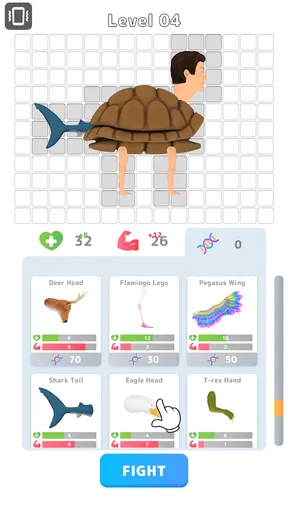
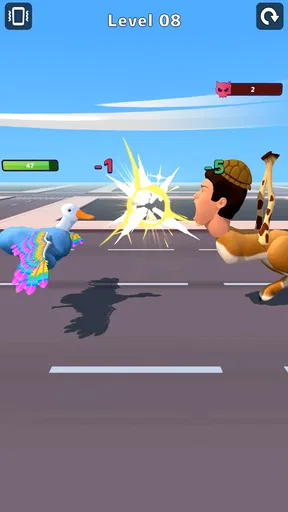
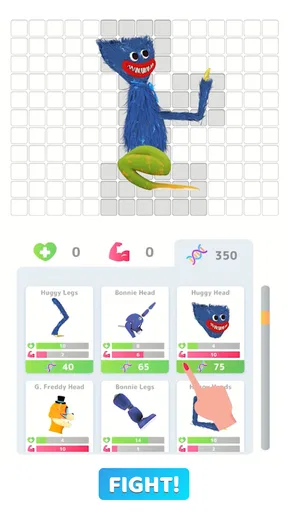
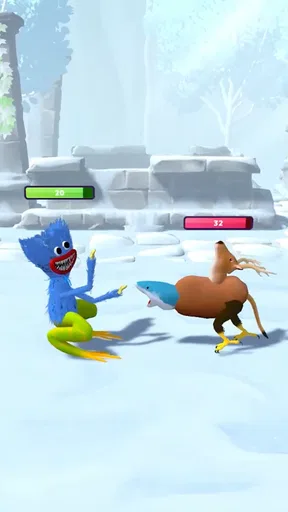
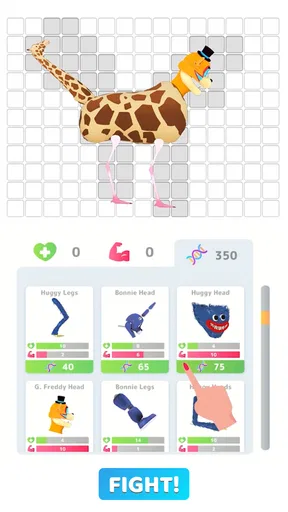
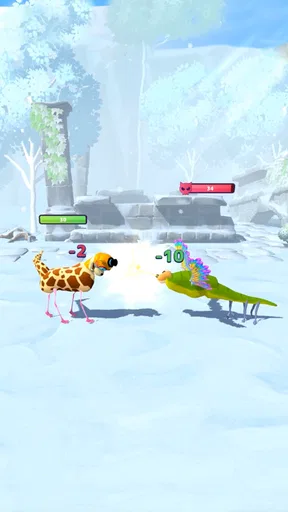
 Analysis by AppCompare
I went into Zoologic: Brainrot Evolution! expecting a quick, silly arcade distraction, and that is exactly where it works best. The game takes the familiar idea of combining matching creatures and pushes it toward deliberately strange animal hybrids, with a tone that feels more like an internet joke brought to life than a traditional puzzle adventure. My first sessions were easy to understand: place or merge creatures, watch the collection change, and keep experimenting to see what appears next.
That simplicity is important. This is not an arcade game built around a complicated story or a demanding control scheme. It is a compact loop designed for short bursts, where curiosity does much of the work. I can open it when I have a few spare minutes, make a handful of decisions, enjoy an absurd visual result, and leave without needing to remember a large amount of information. At the same time, the basic structure gives me enough room to think about order, space, and timing rather than tapping completely at random.
Sunday.gg is the developer behind this free arcade game, which is aimed at players aged 10 and over. It has reached more than five million installs, while its average score sits at 3.4 from roughly three thousand ratings. That combination tells me the concept has broad reach, but also that it will not suit everyone equally. The unusual humor and deliberately chaotic presentation are central to the experience; if that style irritates you, the underlying merge play may not be enough to carry the whole package.
How the strange visual language shapes the game
The strongest identity comes from the creatures themselves. Instead of presenting evolution as something scientific or elegant, the game treats it as a source of visual surprise. The animal designs are meant to look odd, funny, and slightly unhinged. That choice gives every new result a small payoff, because I am not only improving a board or clearing a target; I am also waiting to see what kind of hybrid the next combination produces.
This art direction keeps the setting light. There is no need for a detailed fantasy map or a realistic habitat to explain what is happening. The world is essentially a playful laboratory for combinations, and its internal language is built from exaggerated animals, quick reactions, and comic contrast. That makes the game approachable for someone who wants a humorous mobile experience rather than a serious strategy title.
I also like how the visual absurdity supports the main mechanic instead of sitting on top of it. A merge is easier to care about when the result has personality. Even when the decision itself is simple, the creature that appears gives the action a reason to continue. The art therefore acts as a reward system: it turns a routine combination into a small reveal.
There is a trade-off, though. A style based on “brainrot” humor can feel disposable if you prefer clean, calm, or polished visual themes. Players who enjoy carefully illustrated animals, realistic ecosystems, or a more coherent narrative setting may find this world noisy rather than charming. I would not recommend it to someone looking for a soothing nature game. Its appeal depends on accepting the joke first and the animal design second.
Worth Reading Before You Choose

EA SPORTS FC Mobile 26 Is a Bigger Football Game, but It Takes Time

Flipboard Shows What News Apps Must Do Beyond the Feed

Switching to Android Auto Means Rethinking Your Driving Routine

Google Calendar Makes a Crowded Week Easier to Manage

Ludo King Makes the Most of the Minutes Between Plans

Baby Panda World Brings Quick Play to Modern Phones, but Its Game Library Feels Busy
For younger players, the Everyone 10+ rating is a useful signal that the tone is not aimed at very small children. I would still judge it by personality rather than by the label alone. The game’s humor is intentionally bizarre, and whether that feels harmlessly funny or simply annoying will depend on the player. In my view, it is better suited to older children, teenagers, and adults who already enjoy surreal online humor.
The setting works because it stays focused
One advantage of the stripped-down setting is that it avoids slowing the game down. I am not asked to read long explanations before making a move. The world communicates through its creatures and reactions, so the game can get to the playable part quickly. That is especially useful on a phone, where a player may be starting a session while waiting for a bus or taking a short break.
The downside is that the atmosphere has limited emotional range. The game can be funny and energetic, but it is not trying to create wonder, tension, or a strong sense of place in the way a larger adventure might. Its world is a stage for combinations. Once the novelty of a particular creature wears off, the mechanical decision has to keep the session interesting.
That is why I found the best way to play is to treat the collection as a sequence of visual experiments. I do not approach every move as a high-stakes puzzle. Instead, I look for a sensible merge while keeping an eye on what the board might become after it. This mindset makes the strange art feel connected to the strategy rather than merely decorative.
Sound, rhythm, and the feel of a short session
The game’s mood is built around quick feedback. The visual changes and the pace of combining creatures make each action feel immediate, which suits the arcade category. I never felt that the presentation was asking me to settle into a long cinematic experience. It wants movement, reaction, and another attempt.
That rhythm is one of its practical strengths. A good mobile arcade game should let me understand what I am doing almost instantly, and this one benefits from that low entry barrier. I can play casually without preparing a strategy guide or learning a complicated control layout. The strange creatures provide the personality, while the short action cycle provides the momentum.
At the same time, the quick rhythm can become repetitive if I play for too long in one sitting. The same basic pattern of combining and pursuing the next result does not have the variety of a full puzzle campaign or a competitive arcade game with several radically different modes. I would rather play it in small visits than treat it as my main game for an entire evening.
That pacing also affects how I use sound. I prefer the audio at a level that supports the comic timing without becoming the whole experience. In a game built around exaggerated reactions, sound can make a new merge feel more satisfying, but it cannot replace meaningful decisions. If I am playing in public, the game remains understandable as a visual experience, which makes it convenient for quiet, short sessions.
For someone choosing between this and a conventional match-three game, the difference is mainly in the mood. A standard match-three title usually emphasizes neat patterns, color recognition, and a more familiar reward structure. This game leans into creature discovery and oddness. If you want a clean, orderly board, the usual alternative may be more comfortable. If you want the board to produce something ridiculous, this is the more distinctive choice.
Why the pacing matters more than the spectacle
The visual jokes may bring me back for the first few sessions, but the pacing determines whether I stay. The game succeeds when it lets me make a decision, see a result, and understand what that result means without unnecessary interruption. That creates a pleasant loop for breaks during the day.
A realistic use case is a ten-minute pause between tasks. I can start a session, make a few combinations, and stop before the game becomes tiring. It also works as a low-pressure option for someone who wants interaction without the concentration required by a fast reflex game. The arcade label does not mean every moment is frantic; here, the appeal is more about quick choices and visual feedback.
Where it is less convincing is as a long-form progression game. Players who need deep stages, a substantial campaign, or constantly changing challenges may reach the limits of the format sooner. I would choose a more structured puzzle game for a long commute or a dedicated evening session. Zoologic is better as a small, repeatable snack than as a complete meal.
How the merge loop fits the presentation
The central mechanical idea is easy to grasp: combine animals, evolve the results, and keep pushing toward stranger hybrids. That simplicity is not a weakness by itself. It gives the art room to lead, while still asking me to think about where I place things and which combination is worth making next.
My most useful habit was to avoid merging immediately whenever a combination became available. Holding a creature for a moment can preserve room for a better chain or prevent the board from becoming awkwardly crowded. Even in a playful game, the order of actions matters. I found that a little patience made the session feel more intentional and reduced the sense that I was simply tapping whatever looked available.
Another practical tip is to use the early part of a session to learn the visual logic rather than chase perfect results. The game’s unusual creatures can make it easy to lose track of what has changed. I pay attention to the shape and identity of each new animal, then use that memory to make the next decision faster. This turns the art from visual clutter into a kind of recognition system.
The trade-off is that the game’s accessibility comes at the cost of depth. The rules are friendly, but they do not create the same long-term mastery as a more demanding arcade puzzle. There is a ceiling to how much planning I want to invest in a loop built around comic hybrids. That is fine for casual play, but important to understand before downloading it as a primary strategy game.
The free price makes experimenting easy. I do not need to commit money before finding out whether the humor works for me, and the game’s low learning curve means I can judge that quickly. Still, “free” does not automatically mean it is the best use of every player’s time. Someone who dislikes merge mechanics will probably not be converted by the animal theme, while someone who loves merge games may want more complexity than this particular presentation offers.
Who will enjoy it, and who should skip it
I would recommend it to players who like casual arcade loops, visual surprises, and deliberately silly creature designs. It is especially suitable for people who want a game that can be understood in moments and played without a long setup. The combination of odd art and simple decision-making gives it a recognizable personality that many generic merge games lack.
I would be more cautious about recommending it to players who want competitive precision, a rich story, realistic animals, or a calm visual atmosphere. It is also not my first choice for someone who becomes frustrated by repetition. The game’s charm comes from its presentation and the anticipation of new hybrids, so once that novelty stops working, the basic loop has to carry the experience on its own.
Compared with a traditional idle evolution game, this feels more active because I am making placement and combination choices rather than only waiting for progress. Compared with a classic arcade title based on reflexes, it is much more forgiving and deliberate. Compared with a polished match-three game, it is less orderly but more characterful. Those differences make the choice fairly clear: pick this for personality and short experiments, not for the deepest puzzle system.
The current version is 0.66, and the game supports devices running Android 7.0 or later. That makes it accessible to a broad range of Android phones, including older hardware that may not run newer, visually heavy games comfortably. I would still keep expectations realistic: compatibility does not change the fact that the experience is built around a focused loop rather than a large, feature-packed adventure.
My verdict on the atmosphere and the lasting appeal
What stays with me is the way the art, rhythm, and mechanics point in the same direction. The creatures are strange because the game wants discovery to feel funny. The pacing is quick because the game is designed for repeated small actions. The merge system is straightforward because the visual result is meant to be the main source of surprise. That coherence gives the experience more identity than its simple structure might suggest.
I also appreciate that it does not pretend to be something grander. This is a free arcade game from Sunday.gg, not a narrative animal simulator or a serious strategy project. Its value is in making a familiar mobile action feel unusual through its creature designs and playful tone. When I approach it as a short break rather than a major gaming commitment, it delivers exactly the kind of lightweight amusement I want.
The limitations are equally clear. The humor can be divisive, the loop may feel repetitive during long sessions, and the strategic depth is modest compared with dedicated puzzle alternatives. The atmosphere is energetic rather than relaxing, and the visual language may feel chaotic to anyone who prefers consistent, natural designs. Those are not minor details; they define whether the game will click.
For me, the best recommendation is conditional but positive: try it if the idea of merging ridiculous animals sounds entertaining and you want a quick arcade game with a strong visual identity. Give it a short session before deciding whether the rhythm holds your attention. If it does, the free entry and simple controls make it easy to keep around for spare moments. If you want a deeper system, a longer story, or a calmer mood, another puzzle or arcade game will probably serve you better.
My final take: Zoologic: Brainrot Evolution! is most successful as a compact mood piece with playable mechanics. It turns merging into a parade of odd discoveries, keeps the action approachable, and uses its surreal animal world to give a familiar format a memorable edge. I would not call it endlessly deep, but I would call it easy to pick up, easy to understand, and specific enough to stand apart from a generic merge game.
Pros
- Simple tap-based gameplay is easy for children and casual players to understand.
- Short sessions make it suitable for quick entertainment during breaks.
- Cute creature designs give the evolution system a playful visual appeal.
- Progression provides a clear goal as players unlock new brainrot characters.
- The relaxed pace makes it accessible without demanding fast reflexes.
Cons
- Repetitive merging can become monotonous after extended play sessions.
- Some upgrades may require considerable time or repeated actions to unlock.
- The brainrot theme may not appeal to players who prefer serious visuals.
- Limited strategic depth could disappoint experienced puzzle-game fans.
- Frequent advertisements may interrupt gameplay
- especially for free players.
FAQs for Zoologic: Brainrot Evolution!
What is Zoologic: Brainrot Evolution!?
Zoologic: Brainrot Evolution! is a casual evolution game centered on collecting, combining, and upgrading bizarre animal characters inspired by the popular “brainrot” meme style. You typically begin with simple creatures, merge or evolve them into more unusual forms, and gradually unlock new stages, characters, and rewards. Its playful visuals and straightforward progression make it easy to understand, even if you have never played a merge-style game before.
How do you play Zoologic: Brainrot Evolution!?
The main gameplay revolves around managing creatures and combining matching or compatible characters to create more advanced evolutions. As your collection grows, you can usually improve your progress by completing objectives, collecting coins or other rewards, and unlocking new content. The controls are designed for touchscreens, so most actions involve tapping, dragging, or selecting items. The game is accessible, although later progress may require more patience and strategic resource use.
Is Zoologic: Brainrot Evolution! free to download and play?
Zoologic: Brainrot Evolution! can generally be downloaded and played without an upfront purchase, making it easy to try before spending money. However, free-to-play games commonly include optional in-app purchases, such as currency bundles, boosters, extra attempts, or faster progression. Depending on the version available in your region, advertising may also appear during play. It is worth checking the store listing and your device’s purchase restrictions before letting children play.
Does Zoologic: Brainrot Evolution! require an internet connection?
The basic evolution and collection gameplay may work during some offline sessions, but certain features can depend on an internet connection. Advertisements, cloud synchronization, special events, account-related functions, and in-app purchases may not operate correctly without access to the network. Because requirements can change with updates, I recommend launching the game once online and checking which modes remain available when airplane mode is enabled, especially if you plan to play while traveling.
Is Zoologic: Brainrot Evolution! suitable for children?
The colorful cartoon presentation and simple mechanics may appeal to younger players, but parents should review the game’s store rating, advertising, and purchase options before installation. Meme-inspired creatures can look strange or exaggerated, and the game may encourage repeated play through rewards, unlocks, or timed progress. If children use the app, enabling parental controls, restricting purchases, and discussing advertisements are sensible precautions. The exact suitability also depends on the child’s age and tolerance for repetitive gameplay.


